The Rothschild Family: History, Influence, and the Truth Behind Global Banking Power
The Rothschild family is one of the most talked-about names in financial history. Often surrounded by mystery and speculation, this banking dynasty has played a major role in shaping modern finance. But how much of their influence is real, and how much is exaggerated? Let’s break it down.
Origins of the Rothschild Dynasty
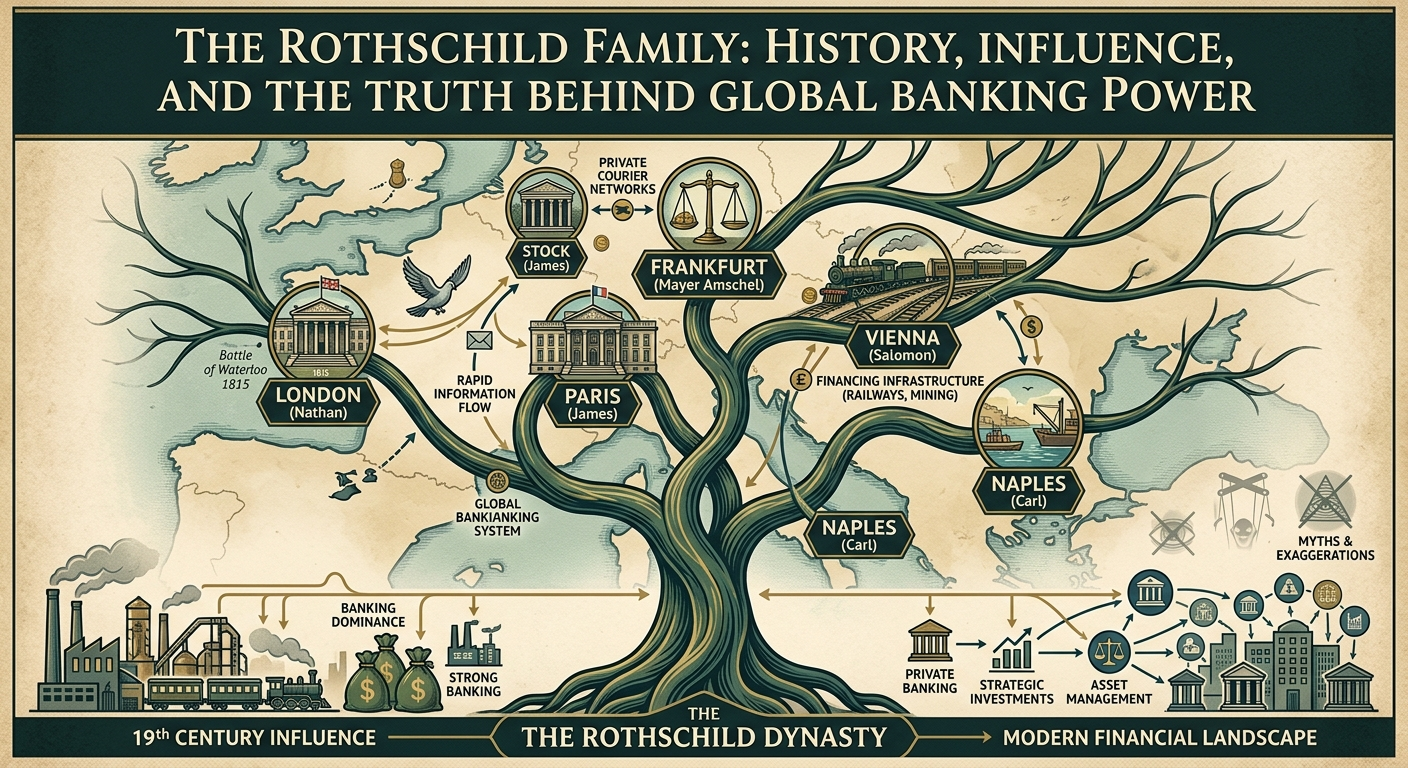
The story begins in the 1760s with Mayer Amschel Rothschild in Frankfurt, Germany. Starting as a coin dealer and money changer, he quickly built a reputation for financial expertise and strategic thinking. His vision wasn’t just to create wealth—it was to build a lasting financial empire.
Mayer Amschel’s genius move was establishing a family-based banking network. He trained his five sons and sent them to key financial hubs across Europe, including London, Paris, Vienna, and Naples. This created one of the first international banking systems in history.
The Power of a Global Network
What made the Rothschilds unique was their communication advantage. In an era before telephones or the internet, they used private couriers and fast communication channels to share financial information quicker than competitors.
This network allowed them to act on market changes before others—even across countries. Their ability to move money, information, and resources efficiently made them incredibly powerful during times of economic and political instability.
The Battle of Waterloo Advantage
One of the most famous stories involves Nathan Rothschild and the Battle of Waterloo in 1815. According to popular accounts, he received news of Napoleon’s defeat before the British government.
Using this early information, he allegedly made strategic moves in the London stock market, leading to massive profits. While historians debate the accuracy of this story, it highlights the importance of information speed in financial success.
Expansion into Global Industries
Throughout the 19th century, the Rothschild family expanded beyond banking. They financed major infrastructure projects, including:
- Railways across Europe
- Mining operations
- Oil and energy developments
Their investments helped shape the industrial revolution and contributed to the modernization of global economies.
Modern Financial Influence
Today, the financial world is dominated by massive asset management firms handling trillions of dollars. While the Rothschild family no longer holds the same visible dominance, they still maintain influence through:
- Private banking institutions
- Strategic investments
- Long-standing financial relationships
Some claims suggest involvement in global institutions and international finance networks, but these are often overstated without concrete evidence.
Myth vs Reality
The Rothschild name is often linked with conspiracy theories suggesting total control over the global economy. In reality:
- They were undeniably powerful in the 19th century
- Their influence helped shape modern banking
- However, today’s financial system is far more complex and decentralized
Modern finance is controlled by a mix of corporations, governments, and institutions—not a single family.
Final Thoughts
The Rothschild family’s legacy is a blend of real historical impact and exaggerated myths. They were pioneers of international banking, masters of strategy, and key players in Europe’s financial evolution.
Understanding their story offers valuable insight into how global finance developed—and why information, networks, and timing remain the true sources of power in the financial world.