The Dark Truth Behind Bollywood & Hollywood Beauty Standards: What They Don’t Tell You
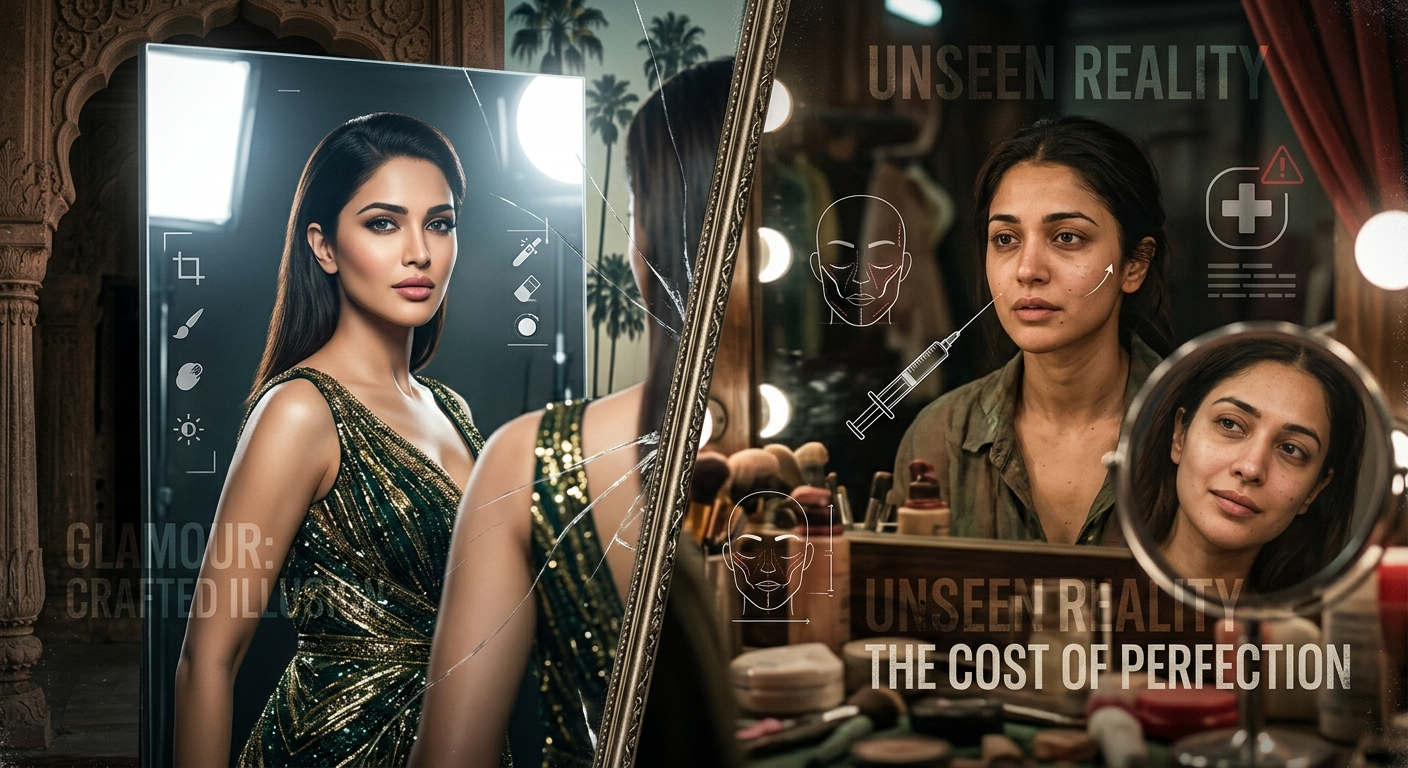
In today’s world, beauty is no longer just about natural features—it has become a carefully crafted illusion. From Bollywood to Hollywood, the faces we admire on screen are often the result of cosmetic enhancements, digital editing, and strict industry pressures. Yet, the narrative sold to the public is very different: “natural beauty.”
This gap between reality and perception is not just misleading—it’s harmful.
The Reality Behind Celebrity Beauty
Let’s be honest—what we see on screen is rarely real.
Across both Bollywood and Hollywood, a large percentage of celebrities have undergone cosmetic procedures. These can include:
- Nose reshaping (rhinoplasty)
- Lip fillers
- Jawline contouring
- Skin-lightening or skin-brightening treatments
While some stars openly discuss these procedures, many continue to deny or avoid the topic. This creates unrealistic expectations, especially among young audiences who believe these looks are naturally achievable.
Plastic Surgery: From Healing to Perfection
Plastic surgery wasn’t always about beauty.
Historically, procedures like rhinoplasty were performed in ancient India over 2,600 years ago for reconstructive purposes—helping people recover from injuries or trauma. It was a medical necessity, not a beauty trend.
The shift began in the 1930s and 1940s, particularly in Hollywood, where appearance became directly tied to success. Over time, cosmetic surgery evolved into a tool for achieving “perfection” rather than restoring normalcy.
The Hidden Dangers Nobody Talks About
While cosmetic procedures are often marketed as safe and routine, they come with real risks.
- Skin-lightening injections, such as glutathione, have been linked to serious health complications and can even be life-threatening.
- The Brazilian Butt Lift (BBL), one of the most popular procedures globally, carries one of the highest mortality rates among cosmetic surgeries.
- Even minor procedures can lead to infections, nerve damage, or long-term side effects.
Despite these risks, social media and celebrity culture often glamorize these treatments without showing the consequences.
The Psychological Impact on Society
The pressure to look perfect is not limited to celebrities—it trickles down to everyone.
Many people, especially teenagers and young adults, develop insecurities by comparing themselves to edited and surgically enhanced images. This can lead to serious mental health conditions like Body Dysmorphic Disorder (BDD), where individuals become obsessed with perceived flaws in their appearance.
Even more concerning is the gradual loss of cultural identity. Unique ethnic features—once celebrated—are now often altered to match Western beauty standards.
The Rise of the “Instagram Face”
One of the biggest contributors to modern beauty standards is social media.
The trend often called the “Instagram Face” promotes a very specific look:
- Slim, sharp nose
- High cheekbones
- Full lips
- Smooth, flawless skin
This look, heavily influenced by Western celebrities and influencers, has become a global standard. As a result, many Bollywood celebrities feel pressured to adopt similar features, leading to a loss of individuality.
The Bigger Picture: Why This Matters
When millions of people consume the same “perfect” images daily, it reshapes how beauty is defined. The problem isn’t cosmetic surgery itself—it’s the lack of transparency and the unrealistic expectations it creates.
Young audiences grow up believing:
- Beauty equals perfection
- Perfection requires alteration
- Natural features are not enough
This mindset can be damaging, both mentally and culturally.
Final Thoughts: Redefining Beauty
It’s time to challenge these artificial standards.
True beauty doesn’t come from symmetry, filters, or surgical enhancements. It comes from individuality, confidence, and self-acceptance. Every face tells a story—and that uniqueness is something no procedure can replicate.
Instead of chasing a manufactured ideal, we should focus on embracing what makes us different. Because in the end, real beauty isn’t created—it’s accepted.