Is the Education System a Trap? The Hidden Truth Behind Schools and Financial Struggles
For generations, we’ve been told that education is the key to success. Study hard, get good grades, earn a degree—and life will be secure. But what if this widely accepted belief isn’t entirely true?
A growing number of experts and thinkers argue that the modern education system is not designed to create financially successful individuals. Instead, it may be structured to produce obedient workers who fit neatly into predefined roles.
The Origins of the Modern Education System
To understand the issue, we need to look at history.
The Prussian Model
After a crushing defeat by Napoleon in 1806, Prussia introduced a compulsory education system. The goal wasn’t creativity or innovation—it was discipline. Schools were designed to produce citizens who would follow orders without questioning authority.
This model emphasized:
- Strict routines
- Memorization over understanding
- Obedience over critical thinking
The Industrial Revolution
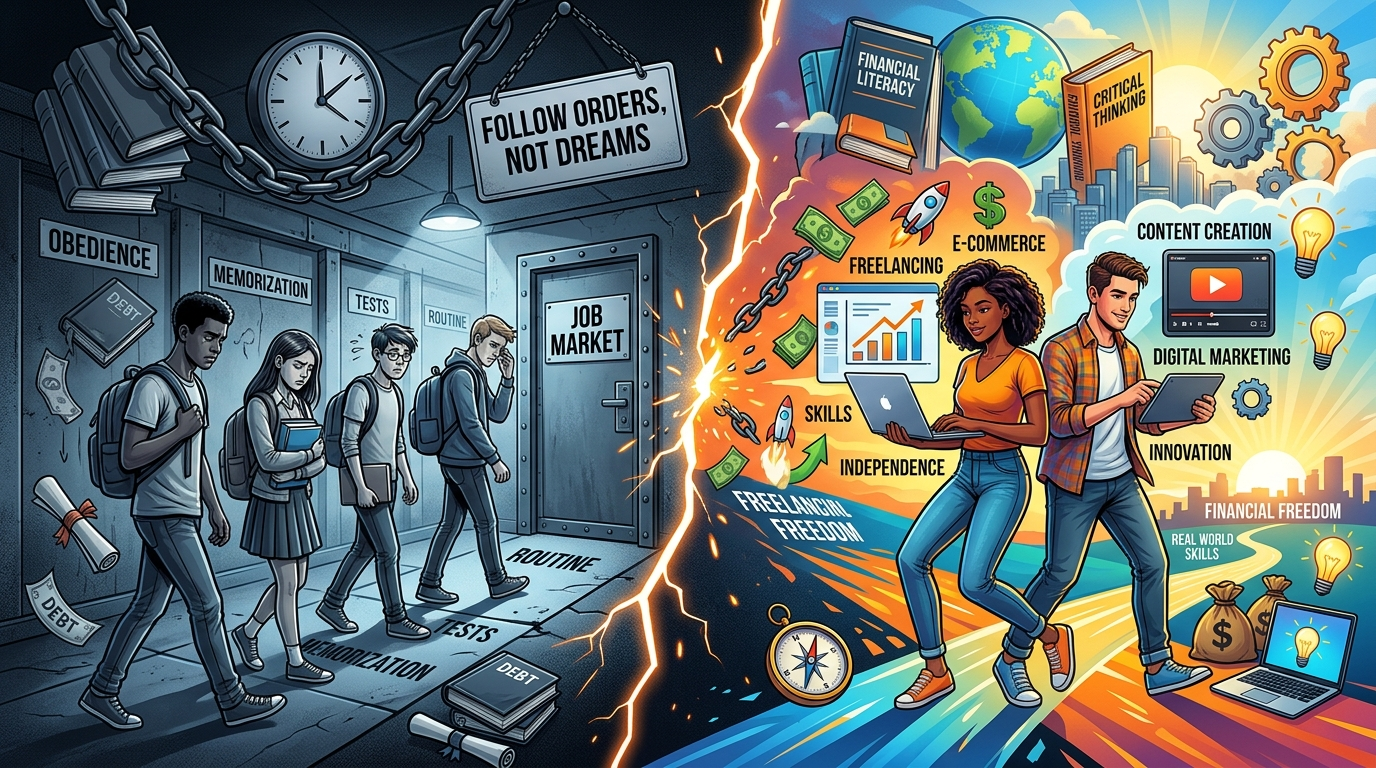
As industries expanded, this education model spread across the world. Factories needed workers who could perform repetitive tasks efficiently. Schools became training grounds for such jobs, conditioning students to follow instructions rather than think independently.
Colonial Influence in India
During British rule, Lord Macaulay implemented a similar system in India. The purpose was to create a class of educated individuals who could serve the British administration. This system prioritized clerical skills over creativity and entrepreneurship—a legacy that still influences education today.
The Modern-Day Education Trap
Fast forward to today, and the system has evolved—but many of its core issues remain.
The Debt Cycle
Students spend years pursuing degrees, often taking loans to afford higher education. After graduation, many struggle to find jobs that match their qualifications. Even when they do, salaries are often not enough to cover:
- Student loans
- Housing costs
- Daily expenses
This creates a cycle of financial dependency where individuals are constantly working just to survive.
Rising Unemployment
In countries like India, youth unemployment is a serious concern. A significant percentage of graduates remain jobless, highlighting a major disconnect between what is taught in schools and what the market actually demands.
The result? Degrees without direction.
What’s Missing in Traditional Education?
The biggest criticism of the current system is its lack of focus on real-world skills.
Most schools and colleges don’t teach:
- Financial literacy
- Digital skills
- Entrepreneurship
- Problem-solving in real-life situations
Instead, students are often trained to pass exams—not to build careers or businesses.
The Path to Financial Freedom
So, what’s the alternative?
Focus on Skills Over Degrees
In today’s digital age, skills matter more than ever. With the internet, anyone can learn:
- Freelancing (writing, design, programming)
- E-commerce
- Content creation
- Digital marketing
Platforms like YouTube, online courses, and practical experience can often provide more value than traditional degrees.
Encourage Independent Thinking
Parents and educators need to shift their mindset. Instead of focusing only on marks and grades, they should encourage:
- Curiosity
- Creativity
- Experimentation
Children should be allowed to explore different paths and discover what truly suits them.
Final Thoughts
Education is important—there’s no denying that. But blindly following a system without questioning its effectiveness can lead to frustration and financial struggle.
The world is changing rapidly. Those who adapt, learn new skills, and think independently are far more likely to succeed.
The real question is: are we preparing students for exams—or for life?